
About Us
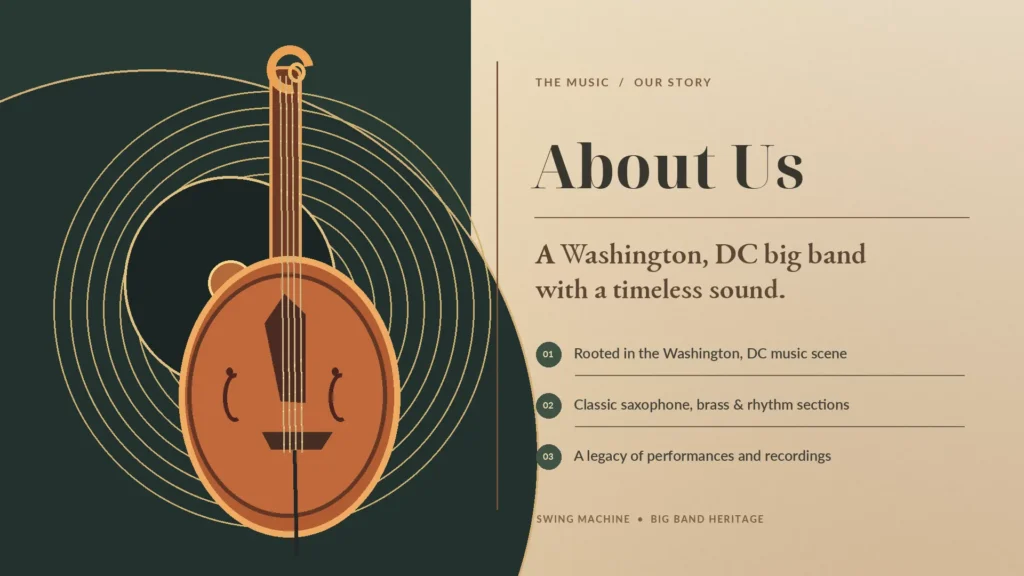
Swing Machine is a big band connected with the Washington, DC music scene. On its original website, the ensemble identified itself with the phrase “DC’s Premier Big Band,” placing its musical identity and big band format at the center of its public presentation.
The historical Swing Machine website was designed to introduce visitors to more than the band’s name. Its main sections covered musical selections, audio samples, upcoming appearances, band members, photographs, client testimonials, recorded material, and contact information. This combination provides a useful record of how Swing Machine presented its music and activities to audiences.
Our Musical Identity
Swing Machine’s identity is rooted in the big band format. Big band music brings together multiple instrumental sections in arrangements that rely on ensemble playing, contrast, rhythm, and the interaction of brass, saxophones, and the rhythm section.
The band’s original website emphasized the music by giving both repertoire and audio their own dedicated sections. This made it possible for visitors to explore what the ensemble performed as well as hear examples of its work.
Performances and Recorded History
Public appearances formed part of Swing Machine’s documented activities. The archived homepage highlighted Swing Machine Big Band Goes to the Movies!, a performance scheduled for May 9, 2015 at the Hylton Performing Arts Center.
The site also referenced the Mid-Life Crisis CD, documenting another part of the band’s musical output. In addition, the homepage displayed a GigMasters Best of 2012 winner emblem. These items are preserved here as elements of Swing Machine’s historical online record.
About This Restored Website
This restored version of swingmachineband.com is intended to preserve information connected to the original Swing Machine website. Its purpose is historical and informational: to document the identity of the band, the music represented on the original site, its recorded material, and notable information that survives in archived versions of the website.
Where detailed historical information is unavailable, the restored content avoids presenting assumptions as facts. This approach helps keep the site useful while remaini.